
10 Common Snagging Issues in New Builds and How to Spot Them

A newly built house can seem perfect during a brief viewing, with fresh paint, shiny tiles, and a spotless kitchen.
However, snagging new builds remains a necessity since many defects emerge when the house is taken into daily use: sticking doors, slow drains, uneven cooling of air conditioning, or damp marks appearing around wet areas.
The following guide enumerates the 10 most common snagging issues in new builds, along with clear-cut ways to spot them during a walkthrough.
Key Takeaways
- Snagging new builds is essential because defects often appear after daily use, not during a quick viewing.
- A snag includes defects, poor workmanship, or unfinished items that should be corrected before handover or occupation.
- The most common new build issues include doors/windows alignment, cracks, tiling/grout defects, electrical faults, plumbing leaks, drainage, waterproofing, AC imbalance, and balcony slope problems.
- Many problems aren’t obvious on day one, so a professional inspection helps reduce blind spots before signing the handover documents.
- A clear building snag list with photos, timelines, and follow-up checks helps developers fix issues faster and protects owners from paying for defects later.
Table of Contents
What is a snag in a new build property?
A “snag” is any defect, shortfall in workmanship, or unfinished piece in a newly built or renovated property that needs correction before handover or occupation. Everything from structural cracks to misaligned doors or incorrect AC performance.
A good building snag list should be clear and action-oriented. In professional snagging, it is always documented as a structured report with defect notes and visual evidence for easy rectification by the developer.
If you are looking for an in-depth room-by-room checklist, you can refer to Property Snagging Checklist: Key Areas to Inspect in Your New Home.
Why New Build Property Snagging Matters before Handover
In Dubai, homeowners can formally raise construction-related defects with authorities, and unresolved snagging issues may also be reported through official channels such as the Dubai Land Department.
In construction, many things can be overlooked, and if not inspected, the owners will have to bear expenses that the developer is liable for.
Hence, snagging a home inspection before handover is important; it documents defects early and strengthens your position to request rectification.
Book your www.poa.ae snagging inspection today and get a photo-tagged report so defects are fixed before handover.
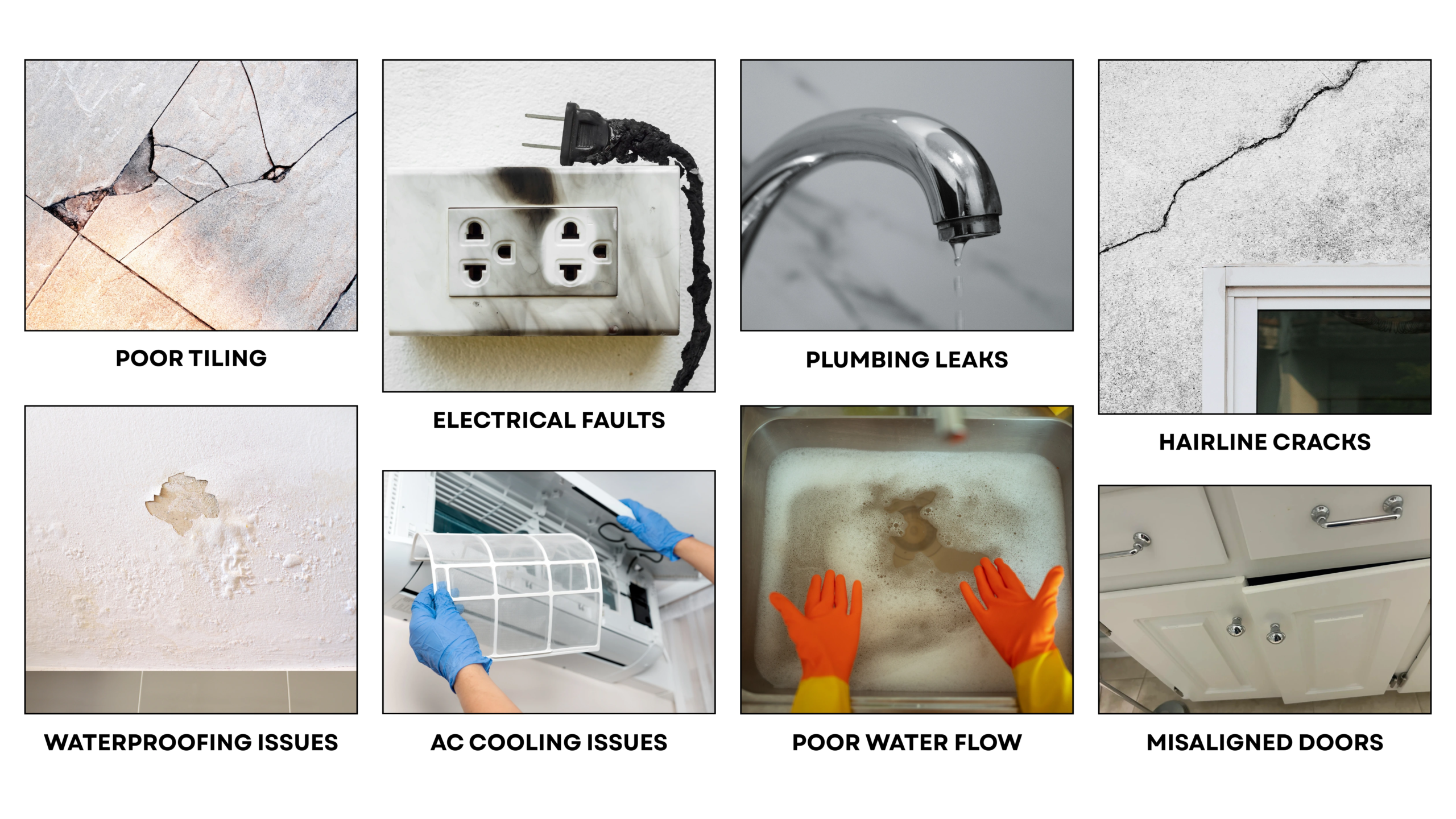
The 10 most common snagging issues in new builds.
1) Misaligned Doors and Windows
What it looks like
Doors that drag on the floor, do not close squarely or have uneven spacing
Sliding doors/windows grind, stick, or fail to lock smoothly.
How to spot it
Open/close each door fully twice. Test locking. Check for rubbing
- Observe daylight/drafts around frames and inconsistent gaps
2) Hairline Cracks in the Walls or Ceilings
What it looks like
Cracks around the corners of the window, ceiling joints, or above the door frames
Small plaster lines that expand with time
How to Recognise It
Inspect walls at an angle in daylight – imperfections show more clearly
Photograph cracks with a reference point and note the location
3) Poor Tiling, Lippage or Hollow Tiles
What it looks like
- Lippage, or uneven tile edges; cracked tiles; bad cuts at corners
- Tiles that are hollow owing to weak bonding
How to Spot It
Tap tiles: a hollow sound may indicate bonding issues
- Inspect grout lines for uniformity and chipping or scratching
4) Messy Grout, Sealant Gaps, and Finishing Lines
What it looks like
Cracked or missing grout, staining in grout lines.
- Uneven silicone or gaps around sinks, tubs, and the edges of kitchens
How to spot it
Inspect corners and wet-area joints (bathroom and kitchen) closely.
- Check for an uneven finish that may cause water seepage later
5) Electrical Faults (Sockets, Switches, Lighting)
What it looks like
- Dead sockets, flickering lights, buzzing switches
Loose faceplates or poorly seated fittings
How to spot it
- Bring a charger and test the different sockets, especially kitchen points
Turn lights on/off and check for flicker, delay or noise
For a comprehensive end-to-end explanation, which covers handover timing, reports, and process: A Complete Guide to Property Snagging in Dubai: What Every Homebuyer Needs to Know.
6) Plumbing Leaks – Sinks and Service Areas
What it looks like
Damp cabinets, water marks under sinks, slow drips at joints
Musty smells near plumbing points
How to spot it
- Run taps, then immediately check under sinks for dampness
Wipe joints with tissue; any moisture that appears quickly is a concern
7) Slow Drainage and Poor Water Flow
What it looks like
Shower water pooling, slow basin drainage, gurgling sounds
- Low pressure in taps, or erratic hot water
How to spot it
Fill the basin briefly and release to check the drainage speed
Test showers for flow and temperature consistency
8) Waterproofing Failures Wet areas + Balconies
What it looks like
Damp patches, staining near bathroom corners or balcony edges
Water is escaping the shower area because of poor sealing or slope
How to identify it
Checks should be made on: shower thresholds, tub edges, silicone lines
Check the edges and corners of the balcony for early staining or dampness
9) AC Cooling Issues and Airflow Imbalance
What it looks like
- One room is noticeably warmer than the others
- Unusual noise, weak airflow, or inconsistent cooling
How to spot it
- Run AC in every room, and compare the airflow at vents
- Listen for rattling or clicking; check for condensation marks
10) Issues with Balcony Drainage and Slope
What it looks like
Water pooling after cleaning or rain
Staining at corners or near the drain
How to spot it
Visually inspect slope direction towards drains
- Pour a small amount of water, if allowed to see drainage
Most Defects Aren’t Obvious on Day One
The problem is that most issues don’t seem “serious” on a short walk-through. AC imbalance, hidden moisture, and slope defects in the drainage often reveal themselves weeks afterwards, at which point accountability is more difficult, and the fix could become the responsibility of the buyer.
Therefore, many buyers hire a snagging professional company before signing over the handover documents.
What to Do After You’ve Built Your Building Snag List
Documentation of defects includes:
Snag List: Submit your snag list to the developer/contractor as early as possible (ideally pre-handover).
- Request a rectification plan detailing timelines
- Record keeping, photo cataloguing, e-mail, and versioned reporting
- Follow-up check after repairs, since partial repairs are common
Take a look at the sample snag report here.
www.poa.ae highlights snagging as a protection which prevents owners from having to pay for problems the developer should fix
Why choose www.poa.ae for new build property snagging in Dubai?
If your goal is a smoother handover with fewer disputes, www.poa.ae provides practical benefits in line with homebuyers’ needs:
- Coverage across a variety of snagging needs, including new property snagging, villas, apartments, pre-rental, and post-handover checks
- Clear reporting and documentation: tagged photos, PDF snag checklist, before/after comparisons
- Confidence-focused support: fast report delivery, plus guidance when dealing with developers
FAQS
1) Can I do new-build snagging myself?
Yes, but www.poa.ae describes it as possible “but not recommended,” since serious problems can be masked or difficult to detect without specialised tools.
2) When should snagging be carried out?
www.poa.ae recommends this to be done before handover and also mentions after renovations or before renting out a property.
3) What should a snag list for a building include?
A clear list of defects with evidence in photos, locations, and prioritisation to help the developer take action.
4) How long does a snagging inspection take?
It depends on the property size; apartments are usually quicker, while villas take longer. A proper inspection needs time to check finishes, plumbing, electrical, AC, and drainage.
5) How long does it take for a developer to fix snagging issues?
Timelines vary by defect type and developer. Always request a written rectification plan and re-inspect after repairs.
Conclusion
The reality of new-build snagging is quite straightforward: most homes have minor defects, while a few contain costly hidden issues.
Identifying common problems with doors/windows, tiling, waterproofing, plumbing, and AC before handover can save time, stress, and money.
Need a developer-ready snagging report, clear evidence, and fast turnaround?
Book your professional snagging home inspection with www.poa.ae today to ensure these defects are resolved before they become your problem.
Disclaimer: www.poa.ae is a registered trademark and an online portal. It is NOT a notary office or a law firm. Any reference to potential legal services or notary services is outsourced to lawyers, law firms, or notaries licensed to practice in an appropriate jurisdiction. Your access to the website and use of our services is subject to our Terms and Conditions, Cookie Policy, nd Privacy Policy.
About the author

Recent Posts


March 06, 2026

March 06, 2026

February 06, 2026

February 02, 2026